
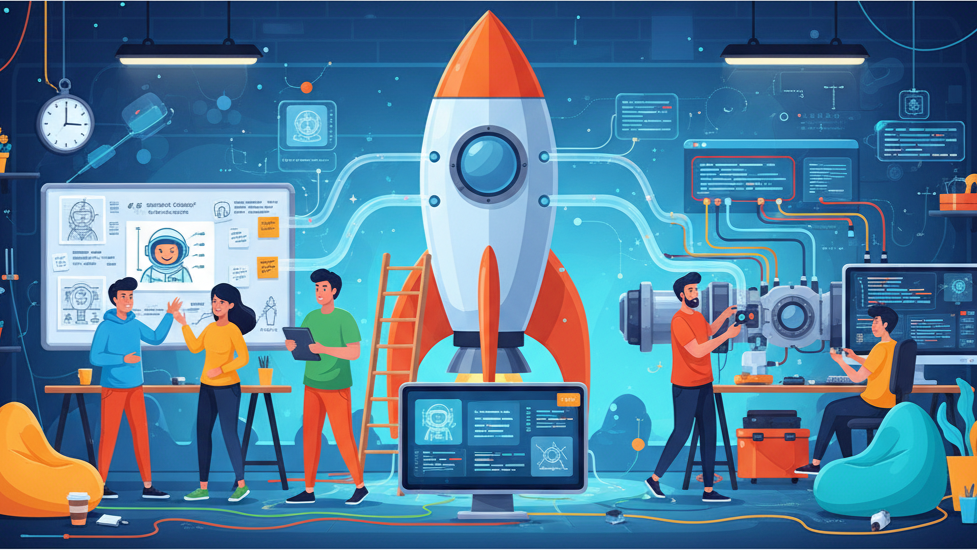
The relationship between product and engineering in modern SaaS companies is a key to unlocking success. After working across multiple startups, I've witnessed firsthand how this collaboration can unlock incredible value and accelerate growth.
Shared Ownership Creates Magic
Product brings deep market insight and user empathy, engineering delivers technical innovation and scalability solutions. Together, they create experiences that neither could achieve alone. Product managers who understand technical possibilities make bolder roadmap decisions, while engineers who grasp user pain points build more elegant solutions.
Embedded Collaboration Drives Innovation
The most successful teams I've worked with sprinkle engineers directly into customer conversations and product discovery. Engineers participating in user research bring fresh perspectives on what’s technically possible, often uncovering opportunities the product team might miss. Product managers with technical fluency can spot win-win scenarios where elegant engineering solutions create unexpected user value.
Outcome-Driven Development Accelerates Success
Rather than traditional requirement handoffs, collaborative teams define success together and iterate rapidly based on real data. Delivering value early and incrementally allows you to react earlier to real user feedback. All users will tell you they will use a feature, reality is the metrics of them actually using it. The minimal viable approach delivers maximum impact, whilst being resource efficient. The Shape-up process offers inspiration on delivering value early, being resource efficient and invites inter-department communication on the process.
Joint Roadmap Unlocks Potential
Product owns the feature roadmap with engineering partnership, while engineering drives the tech debt, architecture, and scaling roadmap with product input. These two different roadmaps require ongoing joint conversations to sequence priorities accurately and create competitive advantages. When both teams understand each other’s constraints and opportunities, the combined roadmap delivers better outcomes for the company than either could achieve independently.
Continuous Feedback Fuels Growth
Short feedback cycles through regular demos, shared dashboards, and organic communication create momentum. Teams stay aligned, catch opportunities early, and build on each other’s insights in real-time. This requires technical infrastructure like feature branch deployments that allow product teams to see work-in-progress without waiting for full releases. Engineers need to communicate progress clearly and frequently, moving beyond generic status updates to specific details about what’s working, what’s blocked, and what’s coming next. When the technical setup supports rapid iteration and engineers provide transparent updates, the entire feedback loop accelerates.
Looking Ahead: The AI Influence
This partnership will likely evolve significantly with AI-driven development. If the promises materialize, especially for large brownfield codebases, we’ll see more upfront design work because it becomes economically viable. Getting features to users quickly remains critical, but early deliveries will be more thoughtful, with the ability to rewrite substantially based on user feedback. As specifications become the new code, we may even enable personalized experiences for individual customers. The toolchain is still maturing, but this product-engineering relationship will transform as AI capabilities advance.
Here’s the Thing
A concerted effort on removing people, process, and architecture bottlenecks will unlock the true potential of this partnership. This requires consistent iteration on every aspect of the SDLC with healthy prioritization of automation, AI, developer experience, and data-driven metrics. Delivering high-quality features without the trudge creates a more enjoyable working environment focused on customer impact and builds long-term advantages for your company, product and career.