Skip to content

Four Signals

Vite Version 8: Unified Rust-Based Bundler and Up to 30x Faster Builds
ai/ml / InfoQ

Vite Version 8: Unified Rust-Based Bundler and Up to 30x Faster Builds

Vite 8, the most significant architectural update since Vite 2, unifies development and production bundling under the Rust-based Rolldown, achieving 10–30x faster builds as evidenced by Linear’s 46s→6s improvement. It adds built-in tsconfig paths, native emitDecoratorMetadata support, and Oxc-powered React Refresh via…

Why it matters

For a solutions architect focused on developer experience and AI toolchain integration, Vite 8’s massive build speed gains and Rust-based unification reduce CI/CD friction, while its console forwarding feature directly supports AI coding agents, and its broad framework adoption makes it a critical dependency for platform engineering decisions.

With Gemini 3.5 Flash, Google bets its next AI wave on agents, not chatbots
ai/ml / TechCrunch

With Gemini 3.5 Flash, Google bets its next AI wave on agents, not chatbots

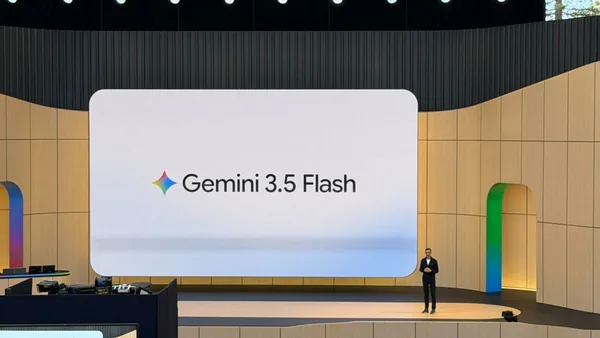
Google launched Gemini 3.5 Flash at I/O, prioritizing autonomous agent capabilities over chatbot interactions. The model is 4–12x faster than competitors, co-developed with the Antigravity agentic IDE, and can independently run coding pipelines, manage research, and even build an OS from scratch. Internal benchmarks show it outperforms Google's previous frontier model, 3.1 Pro, on coding and agentic tasks, with enterprises already using it to automate multi-week workflows in banking and data science. For a solutions architect focused on agent orchestration and platform engineering, Gemini 3.5 Flash's speed and Antigravity integration offer a native environment for building and scaling autonomous multi-agent systems, directly impacting SDLC automation and developer tooling. Evaluate Gemini 3.5 Flash with Antigravity to prototype long-running agentic workflows that combine planning, code generation, and iterative task execution.

Anthropic debuts MCP tunnels and self-hosted sandboxes to lock down AI agent infrastructure
ai/ml / The New Stack

Anthropic debuts MCP tunnels and self-hosted sandboxes to lock down AI agent infrastructure

Anthropic's Claude Managed Agents now offer public beta self-hosted sandboxes and research preview MCP tunnels, shifting tool execution to customer infrastructure via partners like Daytona while retaining the agent loop on Anthropic's side. MCP tunnels provide a single outbound gateway to private MCP servers, managed through Claude Console, without breaking existing integrations. Clay's Sculptor agent uses this to combine local agent power with cloud reliability and filesystem control. For a solutions architect focused on AI agent orchestration and cloud infrastructure, this provides a secure, isolated runtime on customer-managed infrastructure, addressing data privacy and network security concerns critical for enterprise deployment. Evaluate self-hosted sandboxes and MCP tunnels to deploy AI agents with customer-managed infrastructure and private network access, enabling secure tool execution without sacrificing agent loop reliability.

Illustration of a password above an open combination lock, implying a data breach.
ai/ml / The Verge

Google wants to compete with Anthropic’s Mythos

Google is expanding access to CodeMender, its AI agent for code security that flags and fixes vulnerabilities, after debuting the tool last October. DeepMind CTO Kavukcuoglu framed it as helping secure global code bases, as Google competes with Anthropic's Mythos Preview and OpenAI's similar offering. CEO Pichai credited Mythos for demonstrating large model value in security, with Google already in talks with governments and enterprises. For a platform engineer building AI-augmented SDLC pipelines, CodeMender represents a new class of agent-driven security tools that can be integrated into CI/CD workflows to automate vulnerability detection and remediation, directly influencing how you secure your code bases. Evaluate integrating AI code security agents like CodeMender into your pipeline to automate vulnerability repair, not just detection.

Anthropic Introduces MCP Tunnels for Private Agent Access to Internal Systems
ai/ml / InfoQ

Anthropic Introduces MCP Tunnels for Private Agent Access to Internal Systems

Anthropic introduced self-hosted sandboxes (public beta) and MCP tunnels (research preview) for Claude Managed Agents, letting enterprises run tool execution on their own infrastructure via Cloudflare, Daytona, Modal, or Vercel while Anthropic manages orchestration. MCP tunnels provide outbound encrypted connections to private MCP servers, exposing internal databases, APIs, and ticketing systems to agents without opening inbound firewall rules. The release targets a key enterprise bottleneck—compliance and security reviews—by keeping execution and data within the customer's security perimeter. As a solutions architect building AI agent pipelines, this directly addresses the compliance hurdle in regulated environments by letting you run agent execution inside your own VPC while Anthropic handles orchestration—no more six-week security reviews for sandbox clearance. Evaluate self-hosted sandboxes or MCP tunnels to deploy Claude agents within your security perimeter, bypassing compliance delays and maintaining full control over network policies and data residency.

The Private CISA GitHub repo exposed dozens of plaintext credentials to important CISA GovCloud resources. The filenames include AWS-Workspace-Bookmarks-April-6-2026.html, AWS-Workspace-Firefox-Passwords.csv, Important AWS Tokens.txt, kube-config.txt, etc.
cloud / Hacker News (100+)

CISA Admin Leaked AWS GovCloud Keys on GitHub

A CISA contractor's public "Private-CISA" GitHub repo exposed admin keys to three AWS GovCloud accounts, plaintext passwords for dozens of internal systems (including the agency's software artifactory), and detailed build processes — after the admin disabled GitHub's automated secret detection. GitGuardian discovered the leak, which security experts describe as one of the worst government data breaches; CISA is investigating. For cloud and platform engineers, this underscores the critical need for automated secret scanning, mandatory pre-commit detection hooks, and strict credential lifecycle policies to prevent a single misconfigured repo from exposing GovCloud infrastructure, internal CI/CD pipelines, and artifact repositories. Enforce pre-commit secret scanning via tools like GitGuardian or ggshield, disable the ability to override GitHub's push protection, and regularly audit public repositories in your organization for exposed credentials.

Gemini Omni
ai/ml / Hacker News (100+)

Gemini Omni

Google DeepMind introduced Gemini Omni, a multimodal AI model that processes text, images, audio, and video, alongside a dedicated prompt guide to help developers generate realistic, coherent, and creative outputs. The guide emphasizes structured prompts, context injection, and multi-turn interactions to fully exploit the model's cross-modal reasoning. Gemini Omni is accessible via API, enabling integration into applications requiring rich data ingestion and natural human-AI interaction. For a solutions architect focused on AI-driven development and platform engineering, Gemini Omni's multimodal capabilities open new possibilities for building observability dashboards, agentic workflows, and developer tools that understand diverse input types without additional data wrangling. Adopt Gemini Omni's prompt design patterns—especially multi-turn and multimodal context—to reduce latency and improve coherence in production agent orchestration systems.

general / Hacker News (100+)

OpenBSD 7.9

OpenBSD 7.9 delivers the project's signature code audit, security hardening, and hardware support across architectures including amd64, arm64, riscv64, and sparc64. The release provides pre-built packages and multiple installation methods (CD, USB, network/PXE) for over a dozen platforms, reinforcing its reputation for correctness and proactive defense over feature velocity. For a platform engineer evaluating foundational OS security, OpenBSD's rigorous defaults and auditing methodology offer concrete patterns to apply in hardening cloud infrastructure or developer environments. Study OpenBSD 7.9's release notes and security advisories to adopt its proactive code audit and mitigation techniques in your own infrastructure hardening processes.