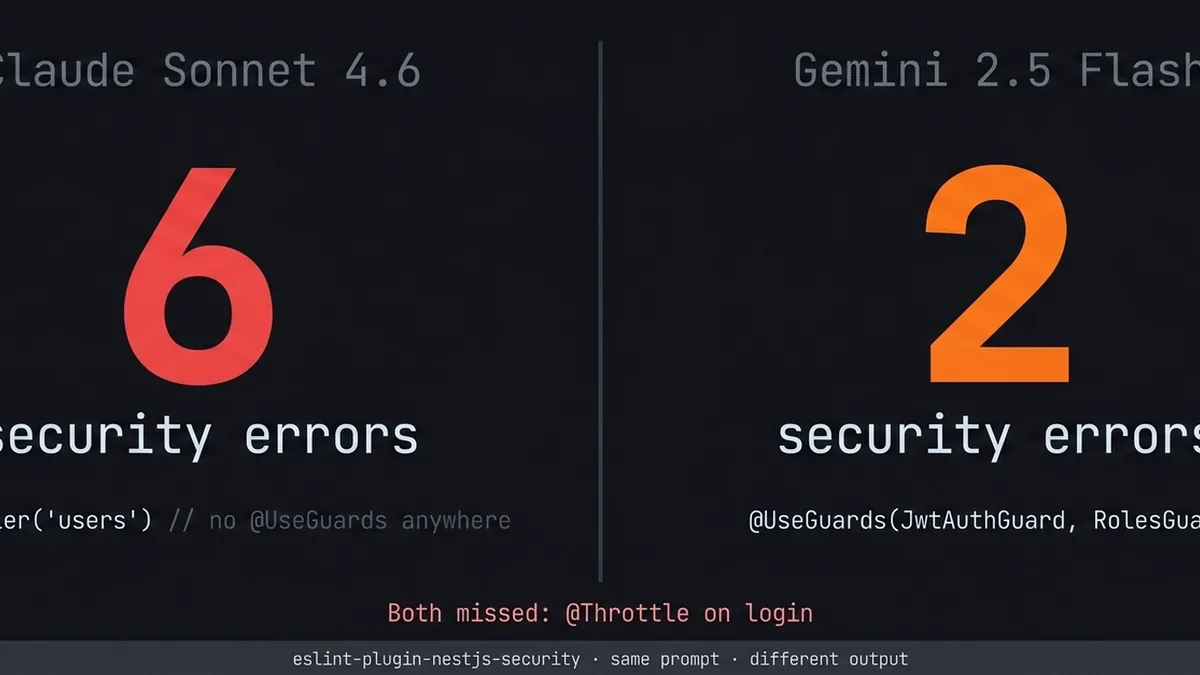
Same NestJS Prompt. Claude Got 6 Security Errors. Gemini Got 2. Here's What Both Got Wrong.
8.3 relevance
Score Breakdown
technical depth 8
novelty 7
actionability 8
community 5
strategic 5
personal 9
Scored daily by a customisable AI persona to surface the most relevant engineering leadership news.
Direct comparison of AI code generation security is highly actionable.
Summary
Claude Sonnet 4.6 generated 6 security errors (no guards, exposed fields, debug endpoint) while Gemini 2.5 Flash produced 2 errors (both missing rate limiting) for the same NestJS users service prompt. Both omitted rate limiting on login, but Gemini's output included class-level guards and @Exclude() on password, showing toolchain choice affects default security posture.