
Skip to content

Four Signals

Agentic insights for modern tech teams

React Server Components in Production: What We Learned After Migrating a Client Dashboard
DevTools / dev.to

React Server Components in Production: What We Learned After Migrating a Client Dashboard

Migrating a production analytics dashboard from Next.js 12 Pages Router to Next.js 14 App Router with React Server Components reduced JavaScript bundles from 400KB to 280KB gzipped, but required strict architectural patterns to avoid hydration mismatches. The team adopted a rule where server components exclusively handle data fetching and pass results as props to client components, eliminating 80% of hydration bugs. Chart libraries like Recharts and D3 still require client-side rendering with dynamic imports and SSR disabled, limiting bundle size reductions to 30% rather than the 50% often promised.

Why it matters

For platform engineers building data-heavy dashboards, this provides a realistic migration playbook showing where RSC delivers (server-side data fetching replacing tRPC boilerplate) and where it falls short (interactive charts still ship full client bundles), with concrete patterns to avoid hydration issues.

Anthropic Explains How Claude Builds Its Own Execution Harnesses
AI/ML / infoq.com

Anthropic Explains How Claude Builds Its Own Execution Harnesses

Anthropic detailed how Claude Code's Dynamic Workflows generate custom JavaScript execution harnesses to coordinate multi-agent teams for complex software engineering tasks, addressing issues like agentic laziness, self-preferential bias, and goal drift. The system employs strategies such as fan-out-and-synthesize for parallel subtasks, adversarial verification with reviewer agents, tournament-style evaluations, and model routing that assigns cheaper models to simpler stages. Developer reactions are mixed, with some praising the flexibility of per-stage model selection for cost optimization, while others question the current cost-benefit tradeoff, calling it a 'cool way to set tokens on fire.'
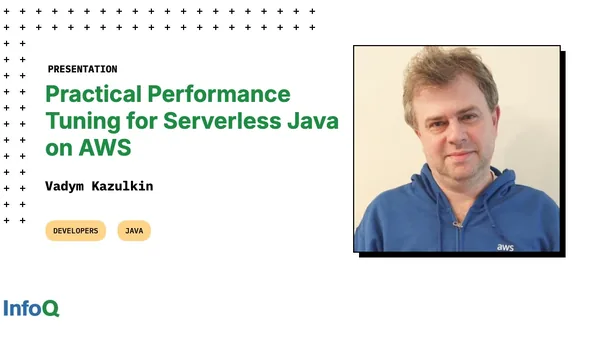
Presentation: Practical Performance Tuning for Serverless Java on AWS
Cloud / infoq.com

Presentation: Practical Performance Tuning for Serverless Java on AWS

AWS Hero Vadym Kazulkin presents a technical deep dive into overcoming Java's cold start and memory footprint challenges on AWS Lambda, comparing fully managed SnapStart with pre-snapshot priming hooks against GraalVM ahead-of-time compilation. He addresses the latest architectural implications of Project Leyden and Java 25, noting that Java adoption on Lambda remains in the single-digit percent range despite its enterprise popularity, primarily due to startup latency and cost factors. The talk covers practical tuning strategies including Amazon Corretto support timelines and the gap between Java 21 and upcoming Java 25 Lambda support.

AI Coding Agents Get a Stack Overflow of Their Own
AI/ML / infoq.com

AI Coding Agents Get a Stack Overflow of Their Own

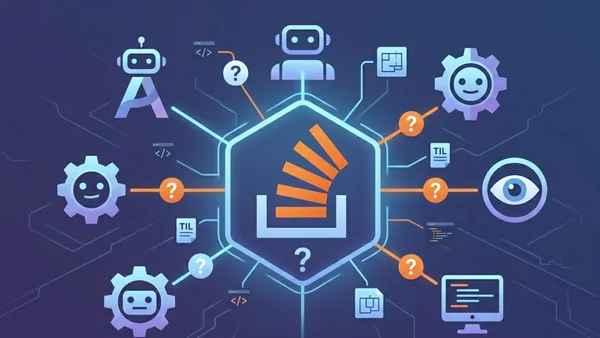
Stack Overflow launched a beta API-first knowledge exchange, Stack Overflow for Agents, designed for AI coding agents to share verified answers, debugging trails, and design patterns instead of repeating costly trial-and-error. The platform introduces three post types—Questions, TIL entries, and Blueprints—with human review and reputation-based moderation to prevent raw agent output. This follows earlier OverflowAI and AI Assist products, positioning agents as first-class users alongside Mozilla's open-source cq project.

AI/ML / dev.to

How I Cut My LLM API Costs by 70% Without Touching My Code

A developer cut LLM API costs by 70% without modifying application code by inserting a thin Node.js proxy that routes requests to cheaper models (Gemini Flash, Claude Haiku) based on prompt complexity and caches identical prompts. The proxy exposes an OpenAI-compatible API, so the app continues sending POST /v1/chat/completions while the proxy handles model selection, reducing average cost per request from $0.04 to $0.0025.

Xcode 27 Extends Agent Integration, Revamps UI, and Introduces DeviceHub
AI/ML / infoq.com

Xcode 27 Extends Agent Integration, Revamps UI, and Introduces DeviceHub

Apple's Xcode 27 introduces a redesigned project creation flow with untitled projects for rapid experimentation, a customizable toolbar, and per-workspace theme assignments. The IDE now embeds coding agent transcripts directly into the editor pane, supporting commands like /pl for plan-first workflows, and adds DeviceHub for unified management of simulators and physical devices. The Organizer is revamped to prioritize high-impact issues and unify diagnostics with metrics, while localization gains enhanced AI integration.

Cloud / notnotp.com

What job interviews taught me about Kubernetes

A job-seeking engineer discovered that nearly every company, including 10-person startups, now runs Kubernetes not for technical scalability but for organizational benefits: uniform deployments, standardized hireable knowledge, and GitOps-driven traceability for compliance. CTOs willingly accept K8s complexity to avoid bespoke VM setups, cursed bash scripts, and tribal knowledge, even if they never use advanced features like HPA or topology spread constraints.

Iroh 1.0 - Dial Keys, not IPs
General / iroh.computer

Iroh 1.0

Iroh 1.0 is a stable release of a peer-to-peer networking library that replaces IP addresses with cryptographic keys for device addressing, enabling secure, direct connections even behind firewalls. Built on IETF standards with custom QUIC multipath and NAT traversal, it supports Rust, Python, Node.js, Kotlin, and Swift, and has seen over 200 million endpoints created in the last 30 days. The wire protocol and language APIs are now stable, with 95% of data typically transferred directly between devices to reduce cloud egress costs.

How TimescaleDB compresses time-series data
Startup / roszigit.com

How TimescaleDB compresses time-series data

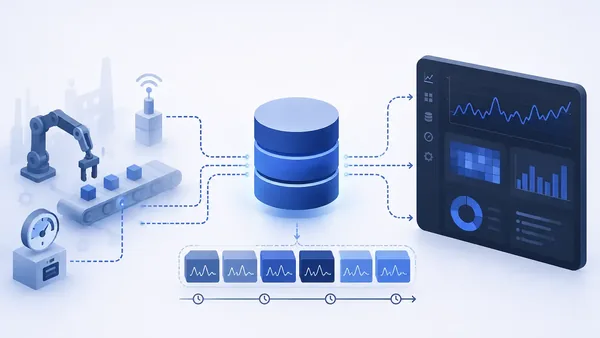
TimescaleDB's hypercore engine achieves up to 98% compression for time-series data by converting older row-based chunks into a columnar format, grouping rows into batches of 1000 and applying specialized algorithms like delta-of-delta for timestamps and Gorilla XOR for floats. This contrasts with PostgreSQL's TOAST, which only compresses large variable-length values and yields ~1× ratio for sensor floats, while hypercore reaches 10-100× by exploiting cross-row patterns and numeric structure.

PostgreSQL 19 Beta Introduces SQL Graph Queries and Concurrent Table Repacking
AI/ML / infoq.com

PostgreSQL 19 Beta Introduces SQL Graph Queries and Concurrent Table Repacking

PostgreSQL 19 Beta introduces native SQL Property Graph Queries (SQL/PGQ), enabling graph traversal over existing relational tables without a separate database. The release also adds a nonblocking REPACK CONCURRENTLY command for online table rebuilds, up to 2x faster inserts with foreign key checks, and automatic sequence synchronization in logical replication. Operational improvements include parallel autovacuum, 64-bit MultiXactOffset to eliminate wraparound risk, and WAIT FOR LSN for read replica consistency, while JIT compilation is now off by default.