Skip to content

Four Signals

Agentic insights for modern tech teams

Shadcn/UI now defaults to Base UI instead of Radix
General / ui.shadcn.com

Shadcn/UI now defaults to Base UI instead of Radix

Shadcn/UI has switched its default component library from Radix to Base UI (v1.6.0, 6M+ weekly downloads), built by the same team. New projects via `npx shadcn init` now pick Base UI, while Radix remains fully supported and can be selected with the `-b radix` flag. Migration is optional and facilitated by an AI agent skill that progressively converts components with customizations, providing per-component reports and clean git history, rather than using a brittle codemod.

Why it matters

For developers building on shadcn/ui, this default change affects new project scaffolding and component selection, and the AI-driven migration approach offers a pragmatic, non-breaking upgrade path that respects custom code—directly relevant to platform engineering and developer experience.

Your AI agent is the most over-privileged account you own
AI/ML / dev.to

Your AI agent is the most over-privileged account you own

AI agents typically receive unrestricted shell access, personal API keys from environment variables, and read access to SSH keys—turning prompt injection into a command channel—so the author's six rules counteract this by scoping agents to task-specific commands like Bash(git *), granting dedicated short-lived service identities, restricting filesystem to one writable workspace, allowlisting egress, gating irreversible actions with human confirmation, and logging all activity for anomaly detection. This applies least privilege principles standard for human accounts to contain agents as potentially compromised deputies.

The MCP attack your code review cannot see
General / dev.to

The MCP attack your code review cannot see

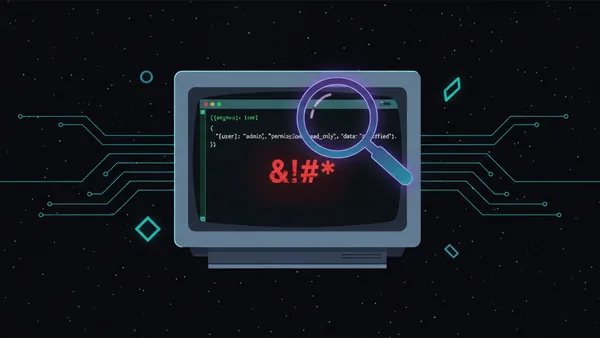
The MCP ecosystem's 14,000+ servers face a novel supply chain attack: tool poisoning via invisible Unicode in metadata, which LLM agents parse as instructions but human reviewers cannot see. A new static scanner, mcpscan (Python 3.9+, zero dependencies), catches these poisoned descriptions along with command injection, dangerous .claude hooks, and other vulnerabilities—addressing the gap left by runtime jailbreak tools like garak.

Teaching a grader the difference between pаypаl and paypal
General / dev.to

Teaching a grader the difference between pаypаl and paypal

An engineer with 115 merged PRs fixing Unicode bugs (Misskey, Strapi, MUI) built a grader for Prime Intellect's Environments Hub that tests 72 cases across tokenization-length, encoding-injection (homoglyphs, CVE-2021-42574), and rendering-output, re-deriving answers from Python instead of storing keys. The 0.43 naive baseline vs. 1.0 correct score reveals how poorly most code handles these subtle text issues.

Hierarchical RBAC in Node.js — without deploying OpenFGA
General / dev.to

Hierarchical RBAC in Node.js — without deploying OpenFGA

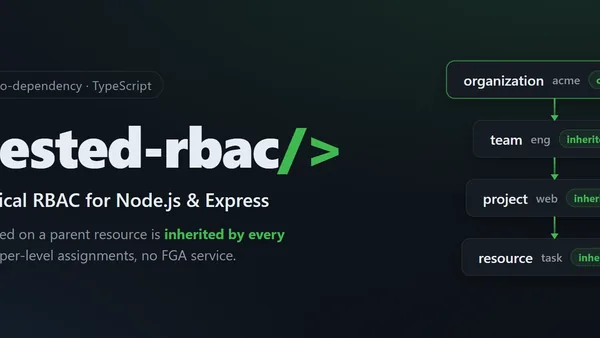
nested-rbac is a new dependency-free, TypeScript-first library that brings Zanzibar-style hierarchical RBAC to Node.js without deploying a separate service like OpenFGA. It resolves role inheritance by having the caller provide the ancestor chain (e.g., project→team→organization), then evaluating permissions against the target and all ancestors with support for wildcards, deny rules, and ad-hoc grants. This fills the gap between flat RBAC libraries and heavyweight FGA engines, giving SaaS apps zero-infrastructure role inheritance for resource trees.

session-indexer: giving Claude Code a memory that doesn't die with the project next door
AI/ML / dev.to

session-indexer: giving Claude Code a memory that doesn't die with the project next door

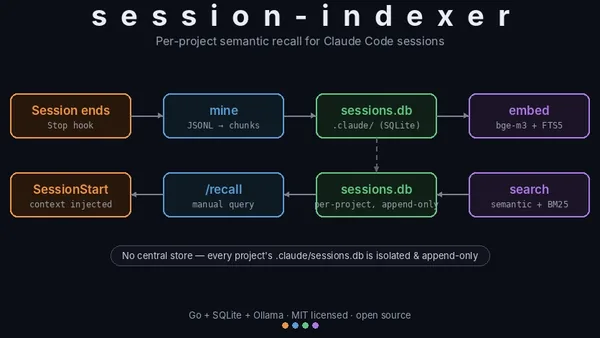
Session-indexer is a Go tool that indexes Claude Code session transcripts per project into local SQLite databases, using optional Ollama bge-m3 embeddings for semantic search and falling back to FTS5 BM25 keyword matching. It hooks into Claude Code's lifecycle: a stop hook mines transcripts within a 50-second deadline, and a start hook derives queries from git branch/commits to inject relevant context. By keeping the database append-only inside the project's .claude/ directory, it avoids the single-point-of-failure problem of centralized memory services.

What is Mistral AI? Everything to know about the OpenAI competitor
AI/ML / techcrunch.com

What is Mistral AI? Everything to know about the OpenAI competitor

Mistral AI, the French AI decacorn, has abandoned the OpenAI-comparison trap for a Palantir-like enterprise model—forward-deployed engineers help governments and large corporations adopt AI using its Forge platform for custom models. With ARR soaring from $20M to over $400M and a rumored $3.5B raise at $23.15B valuation, it's building its own AI cloud via the Koyeb acquisition and planning European data centers to serve sovereign tech needs. CEO Arthur Mensch promises an open-weight model this summer, emphasizing decentralized AI control.

What's All Am I Hosting? Full Infrastructure Breakdown
AI/ML / dev.to

What's All Am I Hosting? Full Infrastructure Breakdown

Shubham hosts his entire online presence—site, APIs, email, monitoring, URL shortener, dev tools—for $0/month using free tiers of Cloudflare (DNS with unlimited queries and DNSSEC), Vercel (Next.js edge network), Render (API server), GitHub Pages (lightweight static sites), Tailscale (WireGuard mesh that punches through CGNAT), and managed databases (Supabase Postgres, MongoDB Atlas). The philosophy is free-tier-first and owning critical paths like DNS, with managed services to avoid self-hosting ops nightmares.

Alibaba reportedly bans employees from using Claude Code
AI/ML / techcrunch.com

Alibaba reportedly bans employees from using Claude Code

Alibaba will ban employees from using Anthropic's Claude Code starting July 10, classifying it as high-risk and mandating its own Qoder tool instead. Anthropic already prohibits Chinese companies and earlier ran an experiment to secretly identify Chinese users, per Anthropic's Thariq Shihipar, to combat unauthorized reseller abuse and model distillation. The move underscores geopolitical barriers in AI tooling and internal substitution efforts.

My credential rule reported 842 secrets in vercel/ai. The real count was 0.
AI/ML / dev.to

My credential rule reported 842 secrets in vercel/ai. The real count was 0.

A credential scanning rule (secure-coding/no-hardcoded-credentials) reported 842 secrets in the vercel/ai SDK, but 807 of those were false positives triggered by long identifier strings like 'experimental_onToolExecutionStart'. In contrast, the peer plugin eslint-plugin-no-secrets, which uses Shannon entropy instead of regex shape matching, flagged only 380 findings with far fewer false alarms. The author's regex rule lacked tests for non-random but long strings, highlighting that high detection counts are meaningless without precision.