
Skip to content

Four Signals

Agentic insights for modern tech teams

Beyond Kubernetes at Modal: How to Scale 1 Million Concurrent Sandboxes in Seconds
Cloud / infoq.com

Beyond Kubernetes at Modal: How to Scale 1 Million Concurrent Sandboxes in Seconds

Modal engineers rebuilt their sandbox infrastructure to support 1 million concurrent sandboxes, abandoning Kubernetes because its centralized etcd store and serialized scheduler become bottlenecks at high pod churn. Their new architecture uses a fleet of parallel scheduling servers that load-balance across workers via direct RPC, each worker self-reporting state to Redis. This design achieved 50,000 sandbox creations per second with median startup-to-code time under 0.5 seconds, while the sole Redis bottleneck scales beyond 100,000 workers.

Why it matters

For a solutions architect focused on cloud infrastructure and AI/ML agent orchestration, this demonstrates a concrete architectural pattern to escape Kubernetes' coordination overhead when building low-latency, high-density execution environments for sandboxes or agents.

“One of the most significant steps in our 26-year history”: JetBrains goes big on agentic development — and bets the IDE still matters
AI/ML / thenewstack.io

“One of the most significant steps in our 26-year history”: JetBrains goes big on agentic development — and bets the IDE still matters

JetBrains CEO Kirill Skrygan unveiled JetBrains Air as an open system for agentic development, unifying its recent AI work: Air in IDEs for agent direction, Air Teams for human-agent coordination, and Air Governance (formerly JetBrains Central) for policy and cost control. Available via IDE, browser, CLI (Air Gateway), and standalone desktop, Air integrates agents like Junie, Claude Agent, and Codex, while JetBrains contends the IDE remains essential for managing AI-generated code.
Presentation: APIs for Agents: Rethinking API Programs in the MCP Era
AI/ML / infoq.com

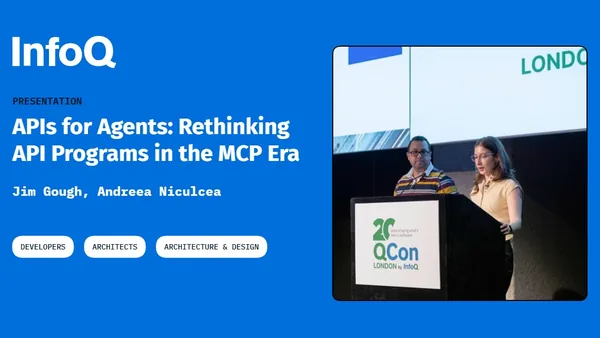
Presentation: APIs for Agents: Rethinking API Programs in the MCP Era

Morgan Stanley modernized its API program using Architecture as Code with the open-source CALM specification, integrating Model Context Protocol (MCP) and Agent-to-Agent (A2A) communications to support agentic workflows. Automated governance enforced through deployment gates has enabled production deployment of over 110 APIs via continuous deployments, focusing on developer experience and platform engineering. This approach allows safe scaling of enterprise AI with zero-downtime platform upgrades.

Per-Agent Cost Tracking for Multi-Agent AI on AWS
AI/ML / dev.to

Per-Agent Cost Tracking for Multi-Agent AI on AWS

Traditional APM misses silent financial waste in multi-agent AI systems because agents can complete runs successfully while burning extra money. The article demonstrates using Traccia to instrument a read-only AWS Account Investigator crew, attributing real Amazon Nova Pro costs to individual agents and reasoning cycles, catching patterns that inflate bills by 1.4x. It references the MAST study showing failure rates up to 86.7% in such systems and aligns with AWS's Well-Architected AI Lens call for moving beyond account-level cost visibility.

Cloudflare Cuts 100 TB of Memory from 1.1.1.1 DNS Cache
Cloud / infoq.com

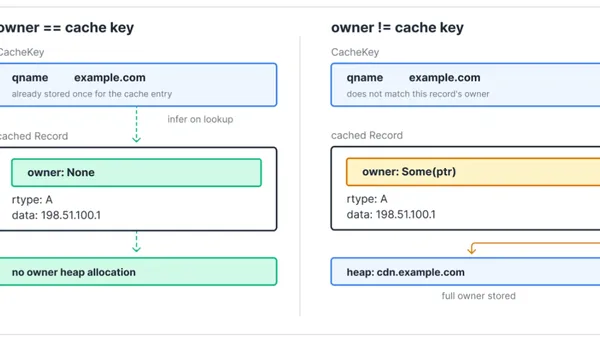
Cloudflare Cuts 100 TB of Memory from 1.1.1.1 DNS Cache

Cloudflare optimized its Big Pineapple DNS cache in Rust by reducing per-entry footprint from 953 to 420 bytes across five changes (Box<[T]>/Box<str>, bitflags, DNS wire format), freeing 100 TB fleetwide across over 250 billion entries. Insertion throughput increased 43% and lookup latency fell 19%, with p99 memory per instance dropping from 9.3 GB to 5.3 GB after a May-July 2026 rollout.

Article: Modular Edge Computing at Multi-Tenant SaaS Scale on Cloudflare Workers
Cloud / infoq.com

Article: Modular Edge Computing at Multi-Tenant SaaS Scale on Cloudflare Workers

At multi-tenant SaaS scale, a single Cloudflare Worker accumulating features (image optimization, routing, config) becomes a deployment bottleneck and shared-risk monolith. The described architecture splits it via a gateway worker and per-feature workers connected by service bindings, enabling independent team ownership, staggered rollouts, and per-account versioning with zero extra network hops. Real-world constraints like building image format negotiation (AVIF, WebP) in-house because CDN zone toggles are too coarse, and maintaining parity across Cloudflare and Akamai (whose execution models differ enough to require re-architecture), demand application-grade testing discipline across unit suites, integration tests, and synthetic monitoring.

MedusaJS Dropped the Foreign Keys Between Its Modules: The defineLink Gamble
General / dev.to

MedusaJS Dropped the Foreign Keys Between Its Modules: The defineLink Gamble

MedusaJS 2.0 eliminated foreign keys between its 20+ commerce modules, using defineLink to create link tables that decouple data models at the database level. Each module remains isolated with its own services and migrations, defaulting to a shared Postgres but enabling per-module datastore swaps. The architecture prioritizes modular portability over relational integrity, a deliberate trade-off for a customizable commerce platform.

YouTube adds new creator tools like video A/B testing, dynamic thumbnails, and live dubbing
DevTools / techcrunch.com

YouTube adds new creator tools like video A/B testing, dynamic thumbnails, and live dubbing

YouTube introduced AI-powered creator tools including Ask Studio for personalized draft feedback and alternative titles/thumbnails, dynamic thumbnails that automatically select the best-performing option, and live auto-dubbing for real-time translation. The platform will also allow A/B testing up to three different Shorts cuts starting in 2027, while existing catalog videos can be autonomously monitored and optimized by Ask Studio. Additional features include AI auto-tagging for affiliate products and live creator matchmaking for co-hosted streams.

A Startup Wants to Power Data Centers With ‘Supercritical’ Carbon Dioxide
DevTools / wired.com

A Startup Wants to Power Data Centers With ‘Supercritical’ Carbon Dioxide

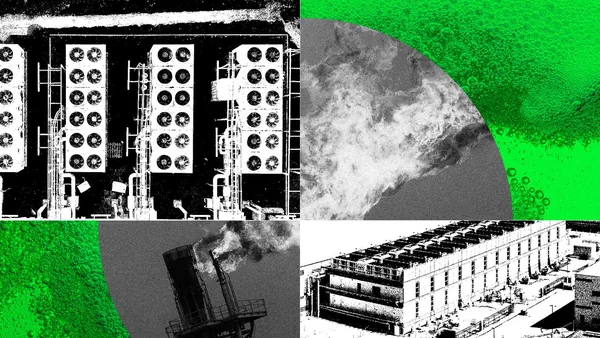
American Supercritical exited stealth with $8M to retrofit data centers' simple-cycle gas turbines using supercritical CO2 units that boost efficiency by up to 50%—from ~35% to ~50%—by capturing waste heat in a closed-loop system, without extra emissions or water use. The 10-MW units emulate combined-cycle plants but are sized for distributed data center power, according to cofounders Simon Shuham and Matthew Carlson.

Your Type Guard Can Silently Drift from Your TypeScript Type 🔧
Languages / dev.to

Your Type Guard Can Silently Drift from Your TypeScript Type 🔧

TypeScript user-defined type predicates can silently drift from their associated types because the compiler trusts the predicate's return type without verifying runtime validation logic, leading to undetected bugs when types evolve. The typedStruct utility from the is-kit library solves this by creating a type-level relationship between the guard and the object type, enabling compile-time detection of mismatches.