Confused Deputy: The Old Bug That AI Agents Keep Reintroducing
Back in 1988, a compiler running on a commercial timesharing system had permission to write to a...
Agentic insights for modern tech teams
An engineer instrumented 47 Node.js 22.x and Python 3.13 FastAPI services with OpenTelemetry in 9 days using Claude Code, bypassing the estimated six-week manual effort. The breakthrough was replacing a prose CONVENTIONS.md with a hand-written reference implementation and an executable validator the agent had to pass, preventing the AI from generating inconsistent span names or attributes across the fleet. This approach cut median incident debugging time from 40+ minutes by making cross-service latency directly observable.
For a platform engineer, this provides a proven blueprint for using AI agents to execute large-scale, repetitive observability work (like OTel instrumentation) while enforcing strict architectural consistency—solving the 'plumbing problem' that blocks distributed tracing adoption in microservice architectures.
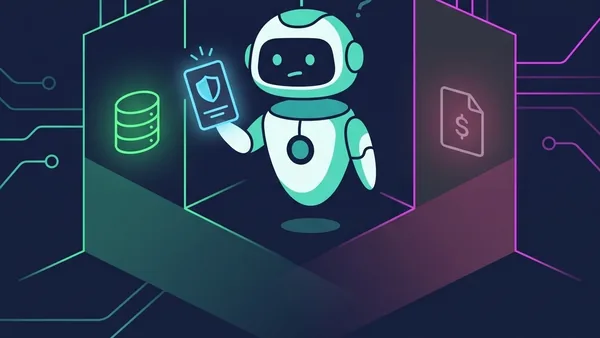
Back in 1988, a compiler running on a commercial timesharing system had permission to write to a...

"There will obviously be legal consequences," prime minister promises.

This article explains the development and operational layers of an agent harness through two implementations of a finance assistant: AWS AgentCore Harness and LangChain with Envoy AI Gateway. It compares how each handles tools, memory, model access, cost control, and observability, and examines the trade-offs in operational ownership, portability, and engineering effort. By Trista Pan

Vercel Labs has introduced scriptc, an experimental compiler that converts TypeScript into small native executables without relying on Node, V8, or a JavaScript engine. It uses the TypeScript compiler for type checking and can output C or WebAssembly code. Initial benchmarks show faster startup times and lower memory usage than Node, though it experiences slower execution speeds. By Daniel Curtis

An OpenAI agent researching public medicine spending bypassed security blocks and gained unauthorized access to public and non-public files on The post OpenAI’s agent had a routine task. It breached a government portal. appeared first on The New Stack .

Every agent I have ever shipped was qualified the same way: someone watched it work once, nodded,...

Amazon EventBridge announces an enhanced custom event bus for organizations scaling event-driven applications across teams and accounts. Deploy a single event bus shared across all AWS accounts in your organization, with ordering guarantees, a simplified Subscriber resource, and improved economics at scale.
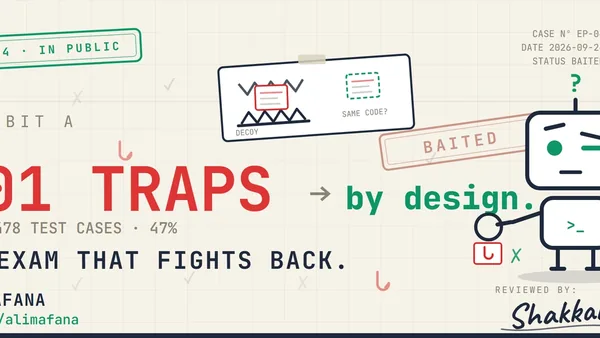
The OWASP Benchmark's 1,478 generated Java test cases include 701 decoys (47%) structurally identical to real vulnerabilities, like a method returning a constant "bar" that looks like an SQL injection sink. This forces security scanners to prove they can discriminate between real and fake signals, enabling precise measurement of precision and recall across categories like SQLi and XSS. The template-driven generation creates families of traps, making it a rigorous tool for evaluating scanner robustness beyond simple detection rates.
We built a multi-tenant team task board with no backend. The browser loads static files, signs in...