Skip to content

Tech News

Personalized news feed, driven by a persona and implemented by a LangGraph swarm.

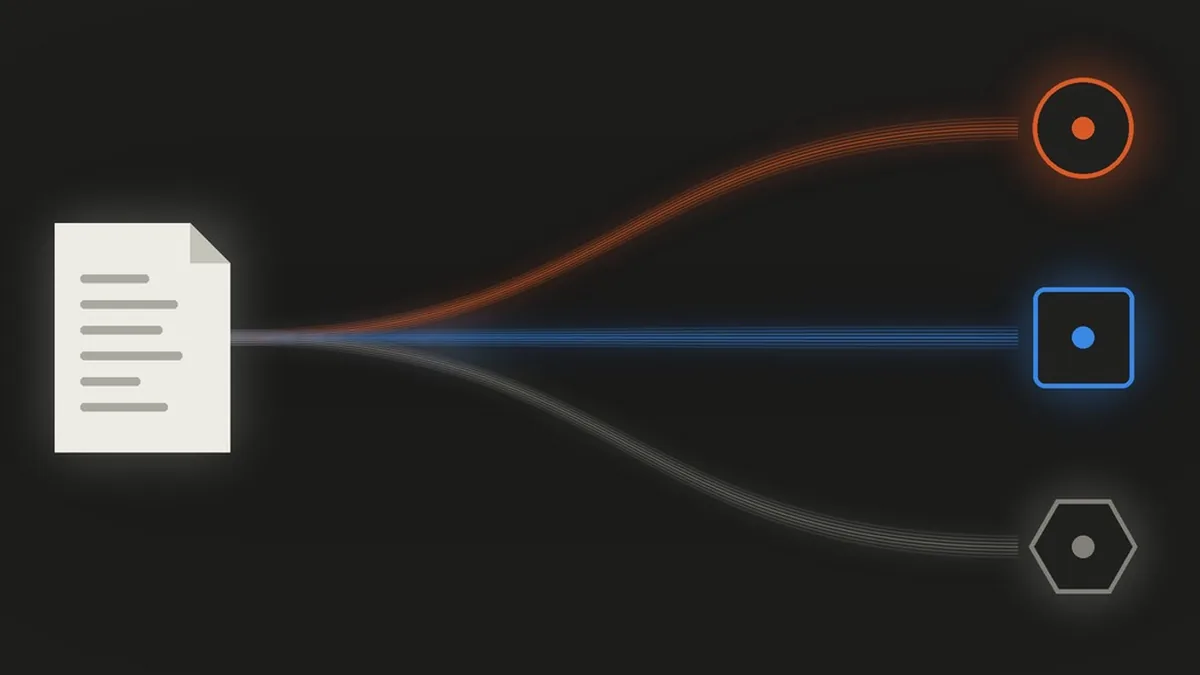
Renting Out One T4 to Three Customers: Gemma 4, vLLM Multi-LoRA and a Rust Gateway
AI/ML / dev.to

Renting Out One T4 to Three Customers: Gemma 4, vLLM Multi-LoRA and a Rust Gateway

A Rust gateway (axum, 245 lines) fronts a shared GCP T4 running Gemma 4 E2B via vLLM Multi-LoRA, enforcing per-tenant API keys, adapters, and prefix caches. vLLM's priority scheduling mitigates contention, dropping TTFT from 29.9s to 6.52s for other tenants when one sends long prompts. The system bills by GPU time via a ledger matching vLLM's counters, turning a single VM into a multi-tenant business.

Why it matters

For platform engineers, this is a concrete reference architecture for multi-tenant LLM serving that solves GPU utilization, tenant isolation, and usage-based billing with a minimal Rust gateway and vLLM's scheduling.

How the Claude Code team does code review / claude.dev Blog
AI/ML / claude.dev

How the Claude Code team does code review

How do you review code at the volume agents produce it? On the Claude Code team, once we had high coverage and deep reviews, we started optimizing for the minimum amount of human review time that doesn't raise reverts or incidents. We've said before that Claude writes about 90 percent of Claude Code's own code. So how do we review code at the volume we produce it? Does anyone read code anymore? And if something breaks, who catches it? This post covers the code review flow on the Claude Code team and how it has evolved. From June to September, merged pull requests to Claude Code's codebase…


4 Coding Agents Pinned Plugins to a Commit SHA. A Branch With the Same Name Won
AI/ML / dev.to

4 Coding Agents Pinned Plugins to a Commit SHA. A Branch With the Same Name Won

Plugin4Shell: Claude Code, Codex, Copilot and Gemini CLI ran git checkout and never checked HEAD. Reproduce it locally and add the one-line fix.

Don't Assume Your Cloud T4 Runs at Spec: Gemma 4 Decode Falls 7% as the Card Warms
Cloud / dev.to

Don't Assume Your Cloud T4 Runs at Spec: Gemma 4 Decode Falls 7% as the Card Warms

The same Tesla T4 on the same Google Cloud VM decoded Gemma 4 E2B at 115 tokens/s at 45 °C and 107 at 77 °C. The card sits at its 70 W limit, a hotter chip draws more power at the same clock, so the clock drops. No thermal throttle fires, and no spec sheet mentions it.

PostgreSQL 19 beta's parallel autovacuum launches workers but leaves vacuum time unchanged
General / dev.to

PostgreSQL 19 beta's parallel autovacuum launches workers but leaves vacuum time unchanged

I measured PostgreSQL 19 beta4's new parallel autovacuum on a six-index, 400,000-row table: 4 workers launched every time, but wall-clock vacuum time stayed within 4% of the serial run, while dead-tuple memory doubled.

Zod Brings In-Process Schema Compilation and a 9x Cut in Memory Footprint
Languages / infoq.com

Zod Brings In-Process Schema Compilation and a 9x Cut in Memory Footprint

Zod is a TypeScript-focused schema validation library that recently released versions 4.5 and 4.6. Key updates include schema compilation for faster data parsing, significant memory usage reductions, and new validation features. The library supports efficient validation processes and remains popular in the JavaScript ecosystem, achieving millions of downloads weekly. By Daniel Curtis

Help Your Coding Assistant Find the Right Code in Large Repos
Open Source / dev.to

Help Your Coding Assistant Find the Right Code in Large Repos

AWS Developer Advocate Saurabh Rob Dahal's workshop teaches a systematic investigation of a TypeScript retry bug (maxRetries:0 still triggers three requests) using ripgrep, ast-grep, and symbol navigation. The assistant-agnostic approach produces a Markdown evidence note that helps any coding assistant (Kiro, Codex, Claude Code) find relevant code in large repos without reading every file. Developers learn to guide AI tools with focused lookups rather than accepting the first plausible fix.

Claude Code Context Window Management in 2026: What Gets Included, What Gets Dropped, and How to Control It
AI/ML / dev.to

Claude Code Context Window Management in 2026: What Gets Included, What Gets Dropped, and How to Control It

Most Claude Code performance problems stem from unmanaged context windows. Learn what gets included, what gets dropped, and how to control the auto-compaction process that silently deletes your conversation history.

Google EnvHarness Enables Self-Evolving Agents to Learn in Dynamics Environments
AI/ML / infoq.com

Google EnvHarness Enables Self-Evolving Agents to Learn in Dynamics Environments

Google researchers open sourced EnvHarness, a framework that dynamically adapts agent-training environments to an agent's weaknesses without modifying the agent, environment, or evaluation system. According to the researchers, this approach can improve both learning effectiveness and efficiency while helping agents overcome their weaknesses. By Sergio De Simone

Grafana Applies SLOs and Error Budgets to AI Agent Behaviour
AI/ML / infoq.com

Grafana Applies SLOs and Error Budgets to AI Agent Behaviour

Grafana Labs proposes applying SRE error budgets and SLOs to AI agent behavior, using evaluations (LLM-as-judge or regex) to create SLIs for multidimensional qualities like groundedness, task fulfillment, and toxicity. This framework treats agent quality as a trade-off against experimentation velocity, making gradual behavioral drift visible through error-budget burn rather than relying on sudden failure spikes. It extends Grafana's existing SLO tooling to turn subjective agent behavior into measurable, time-bound targets.