Skip to content

Tech News

Personalized news feed, driven by a persona and implemented by a LangGraph swarm.

Critical RCE Vulnerability in Apache HTTP Server
Security / wiz.io

Critical RCE Vulnerability in Apache HTTP Server

A critical race condition in Apache HTTP Server's HTTP/2 module (mod_http2) allows remote unauthenticated attackers to corrupt heap memory and achieve arbitrary code execution. The vulnerability (CVE-2026-119618) affects versions 2.4.55 through 2.4.70, with patches available in 2.4.71 and newer. Wiz data shows 64% of cloud environments have vulnerable resources, and 51% have publicly exposed instances, making this a widespread risk for lateral movement in containerized workloads.

Why it matters

As a solutions architect managing cloud infrastructure, this vulnerability directly threatens your Apache deployments in GCP/AWS, especially if you run containerized workloads with HTTP/2 enabled—patching is urgent to prevent RCE and lateral movement to adjacent microservices or cloud metadata endpoints.

Your Agent Needs a Schema, Not a Better Prompt
AI/ML / dev.to

Your Agent Needs a Schema, Not a Better Prompt

LLM agents fail in production not from poor reasoning but from acting on domain-invalid states that prompts alone cannot enforce. A formal ontology using SHACL shapes defines machine-checkable rules—like "a refund must reference exactly one delivered order"—that validate agent actions deterministically in milliseconds without consuming tokens. This pattern separates flexible LLM understanding from rigid domain enforcement, turning validation rejections into structured feedback that teaches the agent or escalates to a human.

Temporal & AI: Agent Memory & Execution State
AI/ML / dev.to

Temporal & AI: Agent Memory & Execution State

Temporal's customer support refund agent demo distinguishes agent memory (what the agent knows) from execution state (where the workflow stopped), showing that a vector store alone can't resume a half-finished process. Killing the worker one step before a Stripe call causes a plain Python loop to lose its place, while a Temporal Workflow lets a new worker resume exactly at "issue refund" without re-asking questions. The demo, built in plain Python and available on GitHub, highlights that durable execution turns crash recovery into a framework guarantee rather than a log-reconstruction problem.

AI Agent Sessions Are a Data Store Nobody Designed
AI/ML / dev.to

AI Agent Sessions Are a Data Store Nobody Designed

Google's ADK Go and Genkit agent frameworks automatically persist full conversation histories, including tool responses and user inputs, as unencrypted snapshots in SQLite or JSON files. A bug in ADK Go demonstrates that deleting a session does not remove associated event data, leaving sensitive information like passwords exposed in the database. This design flaw means agent session stores become unintended data repositories, collecting everything from tool outputs to user-pasted content without encryption or proper lifecycle management.

Lock Your GitHub Actions
Open Source / hugovk.dev

Lock Your GitHub Actions

GitHub Actions now supports workflow lockfiles via the `gh actions-lock` CLI extension, replacing the previous best practice of pinning actions to full SHAs. The lockfile maps tags to immutable commit hashes, enabling readable `vX.Y.Z` references while preventing supply-chain attacks from mutable tags. Renovate and Dependabot already support lockfile updates, and CI verification with `gh actions-lock --verify` ensures lockfiles stay in sync.

LinkedIn Replaces Argo CD with a Custom GitOps Engine for Kubernetes Deployments
Cloud / infoq.com

LinkedIn Replaces Argo CD with a Custom GitOps Engine for Kubernetes Deployments

LinkedIn replaced Argo CD with a custom GitOps engine to manage over 250 Kubernetes clusters, 4,000 services, and 100,000 weekly deployments. The new engine runs each deployment in an ephemeral pod with no shared controller state, uses PUT for full replacements instead of PATCH, and performs a 3-way diff to detect drift. Deployment infrastructure failures dropped from 925 to 63 despite a 3.7x increase in deployment volume, and median time to detect failed deployments fell from 16.1 to 2.45 minutes.

Test your applications against AWS locally with AWS Emulator
DevTools / aws.amazon.com

Test your applications against AWS locally with AWS Emulator

AWS Emulator is a new local service that runs on your machine and speaks the same AWS APIs as the cloud, letting you test DynamoDB, S3, and other services without deploying. Implemented in Rust for low resource usage, it generates its own credentials and certificate, and works with the AWS CLI, SDKs, and coding agents like Claude Code. The emulator is free, open-source on GitHub, and installable via RPM/Debian on Linux or Docker on macOS/Windows.

DuckDB 2.0's quack server lets ten writers share one file for under 2ms a query
DevTools / dev.to

DuckDB 2.0's quack server lets ten writers share one file for under 2ms a query

DuckDB 2.0's quack extension turns a running DuckDB process into a network server, enabling up to ten concurrent writers to share a single file without file-lock conflicts. Benchmarks show throughput peaks at 5 concurrent clients (735 inserts/s) then degrades, with 20 clients matching single-client serial performance (~350/s). Quack does not bypass DuckDB's internal write serialization—it provides a single process gateway that multiplexes writes through the one allowed lock holder.

Meet type-tune! 🦀 Give Your TypeScript Types a Better Home! 😸
Languages / dev.to

Meet type-tune! 🦀 Give Your TypeScript Types a Better Home! 😸

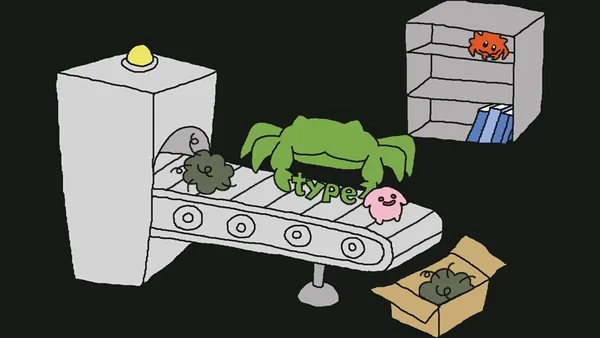
type-tune is a Rust-powered CLI that scans TypeScript projects to find shared type aliases and interfaces, then generates a reviewable plan to relocate them to appropriate directories while updating imports and preserving compatibility re-exports. It addresses the problem of type clutter in large codebases (300k+ lines) where types become shared dependencies but remain in their original component files. Unlike Knip which removes unused code, type-tune organizes actively-used types by creating a deterministic candidate ID for each shared type and validating the rewrite with the TypeScript compiler.

AWS had its agents build a free and open emulator for AWS. They now maintain it, too.
AI/ML / thenewstack.io

AWS had its agents build a free and open emulator for AWS. They now maintain it, too.

AWS released an open-source AWS Emulator built entirely by AI agents, now maintained by them under a Creative Commons Zero license. The Rust-based emulator supports 438 public API models across 200+ services, runs locally without network or credentials, and was generated by AWS's Kiro agentic coding tool in a weekend. AWS divides maintenance among three agent teams that generate test scenarios from Smithy models and validate behavior against real services.