Skip to content

Four Signals

Benchmarking AI Agents on Kubernetes
ai/ml / InfoQ

Benchmarking AI Agents on Kubernetes

A CNCF blog benchmark tested three AI agent configurations (RAG-only via KAITO/Qdrant with BM25+semantic, hybrid RAG-then-local, and local clone) on nine real Kubernetes bugs across kubelet, scheduler, and networking subsystems, all using Claude Opus 4.6 with a five-minute timeout. RAG-only was fastest (76s avg) and ch…

Why it matters

For a senior engineer building agent orchestration systems, this highlights that retrieval strategy is secondary to reasoning quality and issue specification—critical for designing agent workflows that don't just find code but understand system context.

general / Hacker News (100+)

A few words on DS4

This article by Redis creator Salvatore Sanfilippo (antirez) likely discusses DS4, possibly a new data structure or a reflection on Redis's evolution. Given the high engagement on Hacker News, it probably addresses a significant technical or philosophical point about database design or the future of Redis. For a senior engineer focused on infrastructure and open source, antirez's perspective on data structures or Redis's direction can influence architectural decisions and tool choices. Evaluate whether DS4 introduces a paradigm shift in data structure design that could impact your caching or database strategies.
devtools / Hacker News (100+)

Mullvad exit IPs are surprisingly identifying

Mullvad's deterministic exit IP assignment based on WireGuard keys creates a fingerprinting vector: despite 8.2 trillion possible combinations across 578 servers, only 284 unique IP sets exist due to a seed-based RNG using the pubkey and pool size. This allows tracking users across sessions even with key rotation every 1–30 days, as the same seed yields the same IP percentile per server. For a senior engineer building distributed systems or privacy tools, this highlights how deterministic assignment in VPN infrastructure can inadvertently create a stable identifier, undermining anonymity and offering a lesson in RNG design for user-facing services. Audit any system that deterministically maps user keys to IPs or resources—seed-based RNG with static bounds can drastically reduce entropy and enable fingerprinting.

First public macOS kernel memory corruption exploit on Apple M5
security / Hacker News (100+)

First public macOS kernel memory corruption exploit on Apple M5

Researchers from Calif and Mythos Preview demonstrated the first public macOS kernel memory corruption exploit on Apple M5 with MIE (ARM MTE-based hardware memory safety) enabled, bypassing Apple's five-year, billion-dollar mitigation in five days. The data-only local privilege escalation chain targets macOS 26.4.1, using two vulnerabilities and AI-assisted tooling to generalize known bug classes. Full technical details will be published after Apple ships a fix. This shows that even the strongest hardware memory safety can be bypassed with AI-assisted exploit development, which has implications for security architecture decisions and the arms race between mitigations and attacks. Evaluate your reliance on hardware memory safety (like MTE) as a sole defense, and consider layered security approaches including AI-driven threat detection.

Tesla Wall Connector bootloader bypasses the firmware downgrade ratchet
security / Hacker News (100+)

Tesla Wall Connector bootloader bypasses the firmware downgrade ratchet

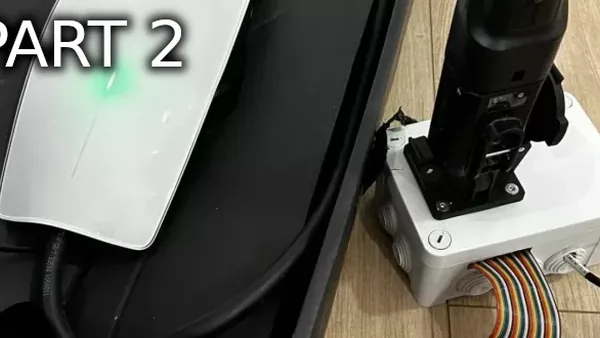
Tesla's anti-downgrade ratchet in Wall Connector Gen 3 firmware 24.44.3 was bypassed by abusing the order of operations in switch_to_new_firmware(): the partition table write occurs before slot erase, allowing a crafted firmware with a lower ratchet to pass validation. The attack, executed over UDS via the charge port, replayed the original Pwn2Own exploit chain. The ratchet is embedded in a VRS2 segment near 0x100000 and compared against a persistent storage value. For engineers building secure update systems, this highlights that cryptographic ratchets are only effective if the update logic enforces them atomically — order-of-operations bugs can completely undermine them. Audit firmware update routines for atomicity: ensure validation and irreversible state changes (like partition writes) happen without exploitable gaps.

A semidetached victorian house. In the front garden a yellow and blue ukrainian flag has been erected. A window box has also been painted yellow.
general / Hacker News (100+)

UK government replaces Palantir software with internally-built refugee system

The UK's Ministry of Housing, Communities and Local Government replaced Palantir's Foundry platform, used to match 157,000 Ukrainian refugees with housing in just nine days, with an internally-built system that saves millions annually. The move follows contracts worth £4.5m and £5.5m after an initial free six-month pilot, which drew criticism for bypassing open procurement rules. The in-house system is described as more flexible, secure, and a step toward 'sovereign technology' reducing reliance on large US vendors. For a senior engineer evaluating build-vs-buy decisions, this case highlights how a government team successfully replaced a commercial platform with a custom solution, achieving cost savings and greater control—relevant when considering vendor lock-in risks in cloud and infrastructure choices. Assess long-term total cost and flexibility when adopting commercial platforms, especially if initial free pilots may lead to expensive, hard-to-replace dependencies.