Skip to content

Four Signals

Agentic insights for modern tech teams

Building reliable agentic AI systems
AI/ML / martinfowler.com

Building reliable agentic AI systems

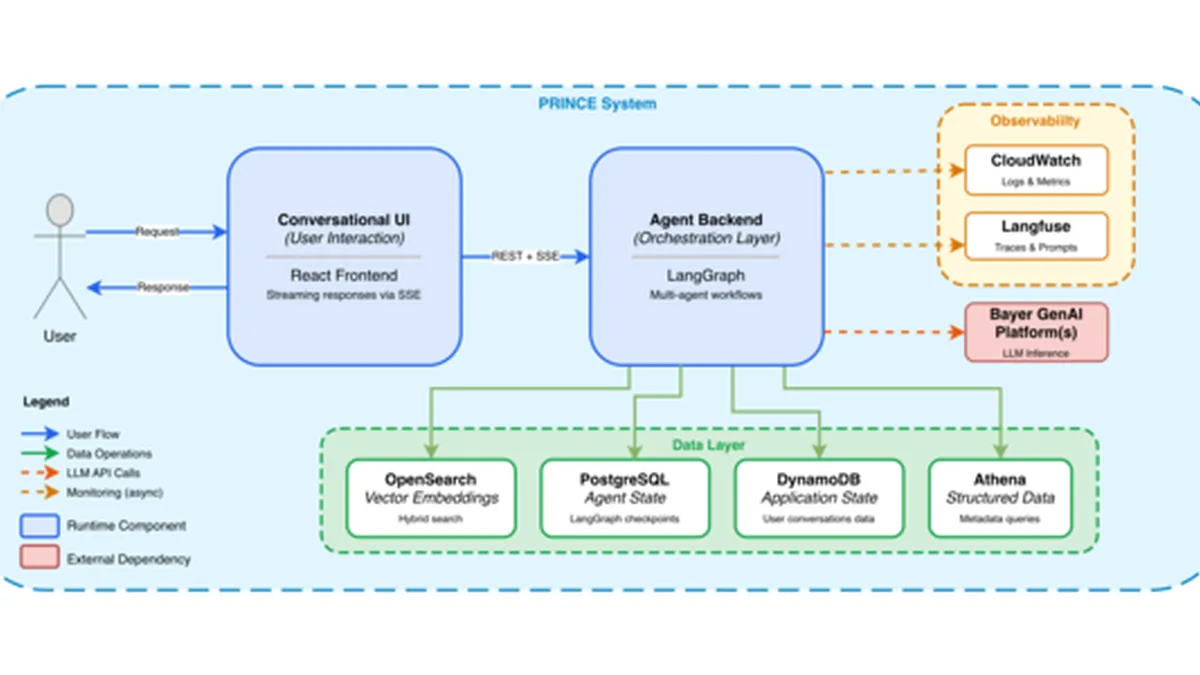
Bayer AG and Thoughtworks built PRINCE, a cloud-hosted platform using Agentic RAG and Text-to-SQL to integrate decades of preclinical safety study reports. The system evolved from keyword search to an intelligent assistant that answers complex questions and drafts regulatory documents, prioritizing trust via transparency, explainability, and human-in-the-loop. Key engineering decisions centered on context engineering—shaping and routing information between specialized agents—and harness engineering for orchestration, recovery, and observability.

Why it matters

For a solutions architect focused on production AI, this case study provides concrete patterns for building reliable multi-agent systems in regulated environments, addressing orchestration, error recovery, and observability—critical for moving beyond prototypes.

Temporary Cloudflare accounts for AI agents
AI/ML / blog.cloudflare.com

Temporary Cloudflare accounts for AI agents

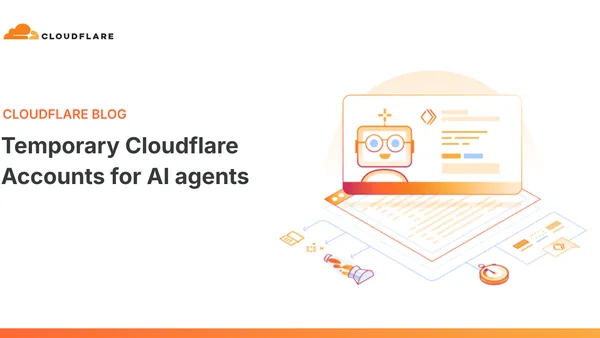
Cloudflare launched temporary accounts for AI agents, allowing them to deploy Workers via `wrangler deploy --temporary` without human-in-the-loop signup flows. The deployment stays live for 60 minutes and can be claimed permanently; if unclaimed, it auto-expires. Wrangler's CLI now prompts agents about the `--temporary` flag when they hit auth walls, enabling iterative write-deploy-verify cycles without browser-based OAuth or copy-paste tokens.

Connecting an MCP server gives your agent hands. It also gives a stranger a way in.
AI/ML / dev.to

Connecting an MCP server gives your agent hands. It also gives a stranger a way in.

Connecting an MCP server transforms a coding agent from a repo-bound reader into an active actor capable of reaching databases, APIs, and services—but this same capability introduces a critical security blind spot. The real danger isn't just the agent executing destructive commands (e.g., deleting files), but the agent being manipulated by untrusted content returned through MCP tools, where an instruction buried in an API response or database row can be indistinguishable from a user directive. Treating every MCP server return as untrusted input—like a form field from a stranger—and combining that with OS-level sandboxing (Claude Code's sandbox with Bubblewrap on Linux, Seatbelt on macOS) that restricts writes and execution, while explicitly denying read access to credentials like ~/.aws/credentials and ~/.ssh/, provides the two separate defenses needed for output and action sides.

Vector Databases Compared: pgvector, Qdrant, Pinecone, Weaviate
DevTools / dev.to

Vector Databases Compared: pgvector, Qdrant, Pinecone, Weaviate

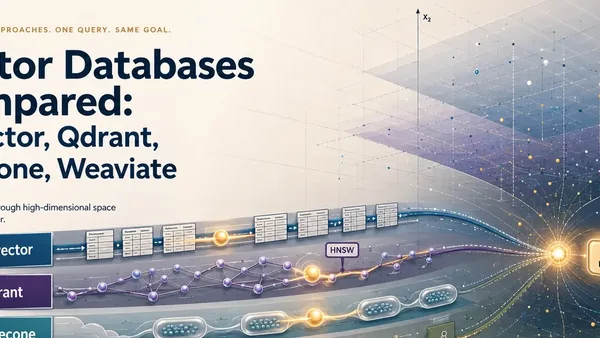
Pgvector, Qdrant, Pinecone, and Weaviate all use HNSW (Hierarchical Navigable Small World) for approximate nearest neighbor search, trading a small recall loss for logarithmic query scaling. The key differentiator is their filtering performance: pgvector's post-filtering degrades with selective filters, while Qdrant and Weaviate pre-filter during graph traversal, and Pinecone's serverless architecture abstracts scaling but limits tuning. Choosing the right one depends on your specific vector count, filter selectivity, and recall requirements, not generic benchmarks.

A Critical Deadline Is Approaching for Windows and Linux Security
Security / wired.com

A Critical Deadline Is Approaching for Windows and Linux Security

Three Microsoft-signed certificates underpinning Secure Boot for Windows and Linux expire on June 24, breaking the cryptographic chain of trust that verifies firmware and bootloader integrity against UEFI bootkits like LoJax and MosaicRegressor. Without updates, systems become vulnerable to bootkits that load before the OS and antimalware, surviving reinstallation and reinfecting disinfected systems. Administrators must deploy updated certificates via firmware updates or OS patches before the deadline to maintain Secure Boot protection.

The Playwright Playbook — Part 7: The CI/CD Setup Nobody Shows You
Open Source / dev.to

The Playwright Playbook — Part 7: The CI/CD Setup Nobody Shows You

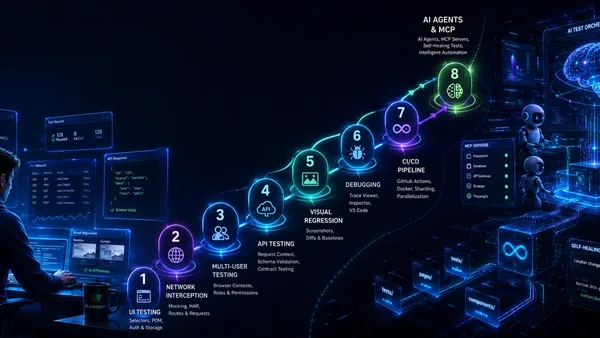
This guide moves beyond basic Playwright CI setups by implementing sharding across multiple machines, a browser matrix (Chromium, Firefox, WebKit), Docker for environment consistency, artifact collection (HTML reports, traces, screenshots, videos), failure notifications, a separate visual regression workflow, and environment-specific pipelines for staging vs production. It provides complete YAML configurations, a Dockerfile, a Slack notification script, and a refined .gitignore to productionize test automation on every PR, merge, and deployment.

DNS is weird inside k8s on AWS
Cloud / dev.to

DNS is weird inside k8s on AWS

Kubernetes DNS on AWS suffers from three compounding issues: the default ndots:5 setting causes every external hostname lookup to generate up to 10 queries (A and AAAA records for each of 5 search suffixes); NodeLocal DNSCache, an optional DaemonSet per node, adds a caching layer between pods and CoreDNS; and EC2's per-ENI DNS packet limit (1024 packets/sec) silently throttles traffic when exceeded. Setting ndots:1 in pod dnsConfig eliminates the query multiplier for external lookups, and enabling NodeLocal DNSCache reduces load on the central CoreDNS service.

Nobel laureate John Jumper is leaving DeepMind for rival Anthropic
General / techcrunch.com

Nobel laureate John Jumper is leaving DeepMind for rival Anthropic

Nobel laureate John Jumper, co-creator of AlphaFold, is leaving Google DeepMind after nearly nine years to join rival AI startup Anthropic. Jumper was also a key member of Google's team developing coding tools, which the company has struggled to commercialize. His departure follows Character AI co-founder Noam Shazeer leaving DeepMind for OpenAI, signaling a talent drain from Google's AI labs.

Inside Atlassian’s Forge Billing Architecture for Distributed Usage Tracking at Scale
AI/ML / infoq.com

Inside Atlassian’s Forge Billing Architecture for Distributed Usage Tracking at Scale

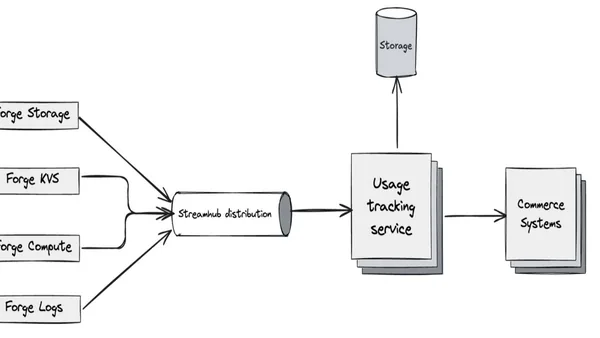
Atlassian detailed the architecture of Forge Billing, a platform for usage-based pricing across its serverless app ecosystem. The system uses a centralized Usage Tracking Service (UTS) to validate, normalize, and deduplicate high-volume events from services like Jira and Confluence, ensuring correct tenant attribution via idempotent design and Kafka-based streaming. It supports near real-time visibility for developers while maintaining financial accuracy through windowed processing and immutable storage for auditability.

Vibe Coding Isn't the Problem. Not Understanding the Stack Is.
AI/ML / dev.to

Vibe Coding Isn't the Problem. Not Understanding the Stack Is.

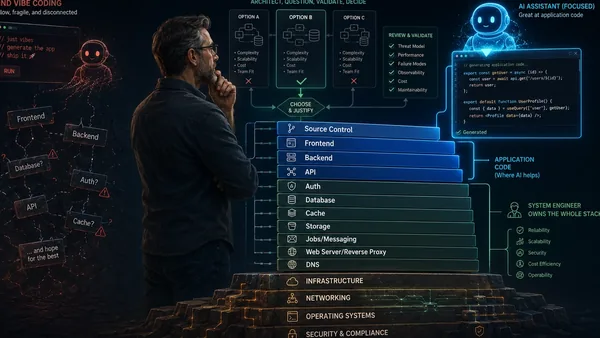
AI coding tools produce code that runs but ignores critical infrastructure layers — hardcoded secrets, wrong OS choices, open SSH ports, and auth that stops at login. A systems engineer argues the real problem isn't vibe coding itself but treating the application layer as the whole stack, while the model has no visibility into operations, security, or cost. The fix requires human oversight to inject environment variables, restrict network access, and choose databases the operator can actually manage at 2am.