
Skip to content

Four Signals

Agentic insights for modern tech teams

Run isolated sandboxes with full lifecycle control: AWS Lambda introduces MicroVMs
Cloud / aws.amazon.com

Run isolated sandboxes with full lifecycle control: AWS Lambda introduces MicroVMs

AWS Lambda MicroVMs introduces a serverless compute primitive using Firecracker microVMs to provide isolated, stateful execution environments that launch near-instantly and pause to low cost when idle. Built on the same technology that powers 15 trillion monthly Lambda invocations, it targets multi-tenant applications like AI coding assistants and interactive code environments, allowing developers to package apps as Docker images and create MicroVM images via S3. This fills the gap between VM-level isolation and container startup speed, with full lifecycle control over environment state.

Why it matters

For a solutions architect focused on AI/ML agent orchestration and cloud infrastructure, this enables running untrusted user code or AI-generated code in secure, stateful sandboxes without managing custom virtualization infrastructure, directly applicable to building multi-agent systems or interactive coding tools.

Browsers shipped a security model for humans. Agents are asking us to keep using it.
AI/ML / dev.to

Browsers shipped a security model for humans. Agents are asking us to keep using it.

The browser security model—same-origin policy, user gesture requirements, and permission dialogs—assumes a human at the keyboard whose intent authorizes actions. The new wave of agent-driven browsers (Anthropic Computer Use, Google Project Mariner, OpenAI Operator, Perplexity Comet) replaces that human with an LLM while keeping the same security mechanisms intact, creating a fundamental mismatch. Anthropic's own launch docs warn that Claude may follow adversarial instructions in webpage content, highlighting the structural vulnerability that the W3C's WebMCP proposal aims to address.

AWS Launches Blocks, an Open-Source TypeScript Framework Designed for AI Agents to Build Backends
AI/ML / infoq.com

AWS Launches Blocks, an Open-Source TypeScript Framework Designed for AI Agents to Build Backends

AWS launched Blocks in public preview, an open-source TypeScript framework where each 'Block' bundles application code, local dev implementation, and production AWS infrastructure. Developers run `npm run dev` to get a working app with Postgres, auth, real-time messaging, and file storage locally without an AWS account, then deploy the same code to Lambda, DynamoDB, Aurora, API Gateway, and Bedrock with zero changes. The framework is designed for AI agents to write code, using built-in steering files to guide agents toward correct architecture without custom configuration.

Agents write code, but they don't remember
AI/ML / dev.to

Agents write code, but they don't remember

AI agents compress implementation from weeks to hours but introduce an 80% problem where the last 20%—edge cases and system seams—requires context that vanishes when the agent session ends. The core issue is that agent reasoning (trajectory) is lost, leaving only the output diff, forcing developers to reverse-engineer decisions. The SDLC will invert from code-as-artifact to intent-as-spine, with the full reasoning chain attached to git as the reviewable unit.

OpenAI launches new initiative to help find and patch open source bugs
AI/ML / techcrunch.com

OpenAI launches new initiative to help find and patch open source bugs

OpenAI launched 'Patch the Planet,' partnering with Trail of Bits to pair security engineers with open source maintainers for code review and patching, using OpenAI's Codex Security tool to automate vulnerability triage and patch generation. The initiative aims to reduce maintainer burden by having Trail of Bits engineers pre-screen findings, develop fixes, and build reusable security workflows, directly addressing the systemic insecurity of open source dependencies that underpin commercial software. This counters the narrative of AI-powered exploit generation (e.g., Anthropic's Mythos) by instead applying AI to defensive security at scale.

Building One Knowledge Graph Across 46 Repositories With Static Analysis (Part 1)
AI/ML / dev.to

Building One Knowledge Graph Across 46 Repositories With Static Analysis (Part 1)

Ryan, CTO at airCloset, built a knowledge graph called code-graph across 46 repositories using tree-sitter static analysis to trace cross-service dependencies that AI alone cannot reliably extract due to context window limits and hallucination. The graph captures boundary nodes—APIs, databases, and events—that span multiple frameworks (jQuery, AngularJS, Express, NestJS, TypeORM, Redux Axios) and services, enabling blast radius analysis for production impact. Part 1 details the construction and limitations of code-graph, while Part 2 will cover service-product-graph (SPG) to compensate for static analysis gaps.

Trust Isn't a Scalar: Typed Provenance for Agent Chains
AI/ML / dev.to

Trust Isn't a Scalar: Typed Provenance for Agent Chains

A single trust score (boolean or scalar) for agent chain outputs collapses under real-world conditions because degradation occurs along different axes—freshness, capability, citation validity—and downstream consumers have conflicting requirements. The correct model is typed provenance: propagate a vector of what-was-degraded-and-how alongside each result, letting each consumer apply its own policy. This aligns with emerging frameworks like TrustBench that keep dimensional scores per trust aspect weighted by domain.

AI/ML / cncf.io

Building Jaeger’s ClickHouse backend: 8.6× compression on 10 million spans

This article details the implementation of ClickHouse as a storage backend for Jaeger, achieving 8.6x compression on 10 million spans. It likely covers the architectural decisions, performance benefits, and the process of integrating ClickHouse into Jaeger v2.18.0, addressing a long-standing user request.

Qodo just shipped cross-repo review. Here’s why it matters for AI-flooded teams.
AI/ML / thenewstack.io

Qodo just shipped cross-repo review. Here’s why it matters for AI-flooded teams.

Qodo launched Cross-Repo Code Review, Custom Rules Miner, and Skill Review Standards to address governance gaps as AI-generated code floods enterprise teams. Citing Google DORA 2025 data showing AI-assisted PRs are 154% larger, take 91% longer to review, and ship 9% more bugs, Qodo’s tools automatically detect cross-repository breaking changes and mine coding patterns from existing codebases to enforce previously unwritten standards. The platform targets the growing complexity of multi-repo architectures where a single change can silently break downstream services, a problem amplified by AI agents producing larger, more frequent PRs.

The AI world is getting ‘loopy’
AI/ML / techcrunch.com

The AI world is getting ‘loopy’

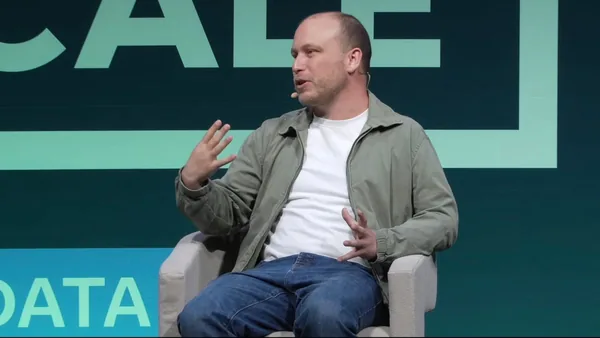
Boris Cherny, creator of Claude Code, declared at Meta's @Scale conference that agentic loops—where AI agents continuously prompt other agents to improve code architecture and unify abstractions—are as significant a step as the shift from hand-written code to agent-written code. These non-deterministic loops, like the Ralph Loop which checks if goals are met, burn tokens continuously with no cost ceiling, making them expensive but potentially transformative for tasks like incremental codebase improvement.