
Skip to content

Four Signals

Agentic insights for modern tech teams

Claude Code vs Cursor vs Windsurf in 2026: Which Agentic IDE Actually Ships Production Code
AI/ML / dev.to

Claude Code vs Cursor vs Windsurf in 2026: Which Agentic IDE Actually Ships Production Code

Claude Code, Cursor, and Windsurf serve distinct production use cases rather than competing directly. Claude Code completes 87% of multi-file TypeScript refactoring autonomously via terminal-native agents with MCP server integration, but lacks inline autocomplete. Cursor leads in chat-driven edits and autocomplete within VSCode but completes only 34% of cross-module changes autonomously. Windsurf prioritizes team governance with audit trails and approval gates, trading execution speed for compliance. No single tool handles both real-time autocomplete and autonomous agent workflows effectively, making workflow-specific selection critical.

Why it matters

For platform engineers and team leads evaluating agentic IDEs, this clarifies that tool selection should be driven by workflow primitives—terminal autonomy vs. editor integration vs. governance—rather than feature lists, preventing costly integration mismatches in production pipelines.

AWS Open-Sources Dogwood, Extending Cedar to Govern Sequences of Agent Tool Calls
AI/ML / infoq.com

AWS Open-Sources Dogwood, Extending Cedar to Govern Sequences of Agent Tool Calls

AWS open-sourced Dogwood, a policy language for agent tool calls that extends Cedar with temporal conditions capable of inspecting an agent's event history. Unlike Cedar's stateless, single-request evaluation, Dogwood supports operators like `formerly`, `count_within`, and `sum_within` to enforce constraints across sequences—such as cumulative spending limits or approval gates before sensitive actions. The language ships under Apache 2.0, is supported by AgentCore Policy, and is built as a separate language to preserve Cedar's formal verification capabilities, which temporal conditions forfeit.

Cloudflare Adds Agent Tracing, with Truncation Limits and Uneven Payload Defaults
AI/ML / infoq.com

Cloudflare Adds Agent Tracing, with Truncation Limits and Uneven Payload Defaults

Cloudflare launched agent tracing, the first component of Cloudflare Agents, adding agent-level spans to existing Workers infrastructure tracing. The feature captures invocations, model calls, tool execution, and approvals in a waterfall view, with subagent work nested under parent operations. However, payload recording defaults differ between Think (opt-in) and Flue (opt-out), and traces are explicitly not a lossless record, with truncation limits on long messages and no image support in session replay.

I Used Sentry to Expose a Silent Data-Loss Bug with Zero Errors
Open Source / dev.to

I Used Sentry to Expose a Silent Data-Loss Bug with Zero Errors

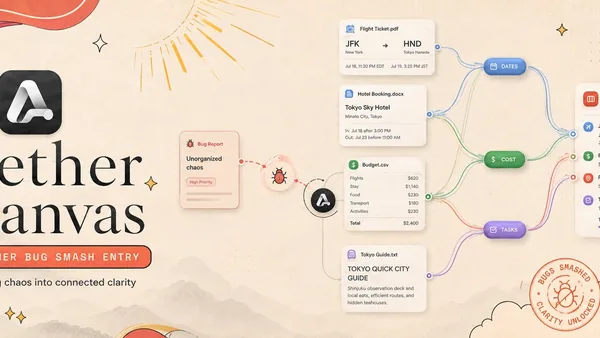
A developer discovered a silent data-loss bug in their Electron app Aether Canvas where concurrent workspace writes to a JSON index caused lost entries despite atomic file operations and no errors. The root cause was a read-modify-write race condition: two operations could read the same stale index before either write queued, so both writes succeeded but the last one overwrote the other's addition. Sentry's error monitoring caught nothing because no exception was thrown, highlighting that green success signals only operation completion, not data integrity.

React useLatest Hook: Read Fresh State in Async Callbacks (2026)
DevTools / dev.to

React useLatest Hook: Read Fresh State in Async Callbacks (2026)

React's `useLatest` hook from `@reactuses/core` solves the stale closure problem in async callbacks by returning a `MutableRefObject` whose `.current` is always the most recently rendered value, updated via `useIsomorphicLayoutEffect` rather than during render to maintain purity. The hook is five lines long, requires no dependency arrays, and is designed for patterns like `setTimeout`, `await` continuations, and WebSocket handlers where a callback outlives its originating render. A key pattern is using both the closure (for the value at action time) and the ref (for the current value when the promise resolves) to correctly determine post-async state like `"saved"` vs `"dirty"`.

78 seconds to 2: the covering index that fixed our slowest page
General / dev.to

78 seconds to 2: the covering index that fixed our slowest page

A covering index with six columns in precise order cut a reporting query from 78 seconds to 2 seconds on a MySQL table with ~700k rows. The fix eliminated 20,000 random I/O lookups by including filter columns (moved_to_history, deleted_at) and the GROUP BY column (user_id) in the index, enabling the engine to satisfy the query entirely from the index without touching the clustered table. The index was deployed live using MySQL's INPLACE algorithm to avoid table locking.

Your AI Agent Doesn't Need More Memory. It Needs Receipts.
AI/ML / dev.to

Your AI Agent Doesn't Need More Memory. It Needs Receipts.

AI agents often duplicate actions not because of memory limits but because they lack action receipts—durable records tracking whether an external system actually committed a request. Separating agent memory into four layers (context, plan, attempt, effect) reveals that timeouts and connection resets leave agents in an ambiguous state where retrying may cause duplicate emails, listings, or publications. A receipt written before submission and updated through states like submitted, outcome_unknown, and succeeded turns transport failures into reconcilable knowledge rather than blind retries.

Anthropic shares more details about how Claude’s new watermarks will work
AI/ML / techcrunch.com

Anthropic shares more details about how Claude’s new watermarks will work

Anthropic detailed how it will watermark Claude's text output using Google DeepMind's SynthID-Text approach, complying with the EU AI Act's Transparency Code. The watermark embeds detectable patterns during low-stakes word choices (e.g., 'overcast' vs. 'grey') without degrading output quality, and Anthropic plans to release a detection API. Light editing won't fully remove the watermark, but code generation is less affected due to constrained token selection, though comments may still carry watermarks.

AWS Introduces Native Vector Search for DynamoDB
AI/ML / infoq.com

AWS Introduces Native Vector Search for DynamoDB

AWS launched native vector search for DynamoDB, enabling approximate nearest-neighbor queries directly on embeddings stored in table attributes without a separate vector database. The feature supports up to 4096 dimensions, Euclidean/Cosine/Dot product distance functions, inline filtering, and horizontal scaling to trillions of vectors with single-digit millisecond latency, billed per byte for writes, queries, and storage. Developers can use any embedding model (e.g., Bedrock Titan, Cohere, OpenAI) via the new SearchVectors API, eliminating the need to synchronize data between DynamoDB and external vector stores for RAG, agentic memory, or recommendation systems.

Per-developer environments were the goal. Agents moved the goalposts.
AI/ML / thenewstack.io

Per-developer environments were the goal. Agents moved the goalposts.

Multi-tenancy has shrunk from organizations to teams to individual developers over 60 years, but coding agents break the person-tenant assumption by running multiple concurrent workstreams per developer. Anthropic ran nearly 2,000 Claude sessions across two weeks building a C compiler, and Cursor encourages running as many agents as desired in parallel. The new tenant is no longer the developer or agent but the individual change, as each concurrent workstream needs its own isolated environment with data, topics, and service versions.